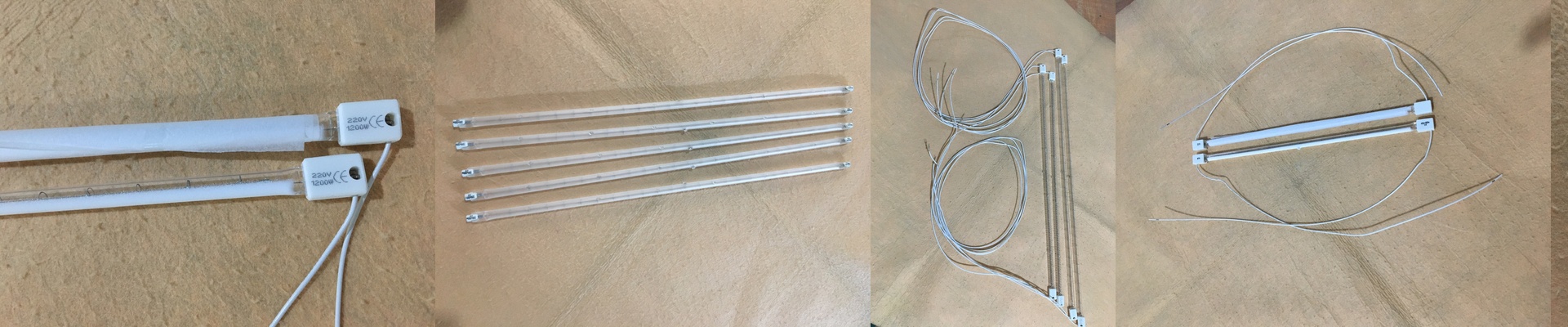
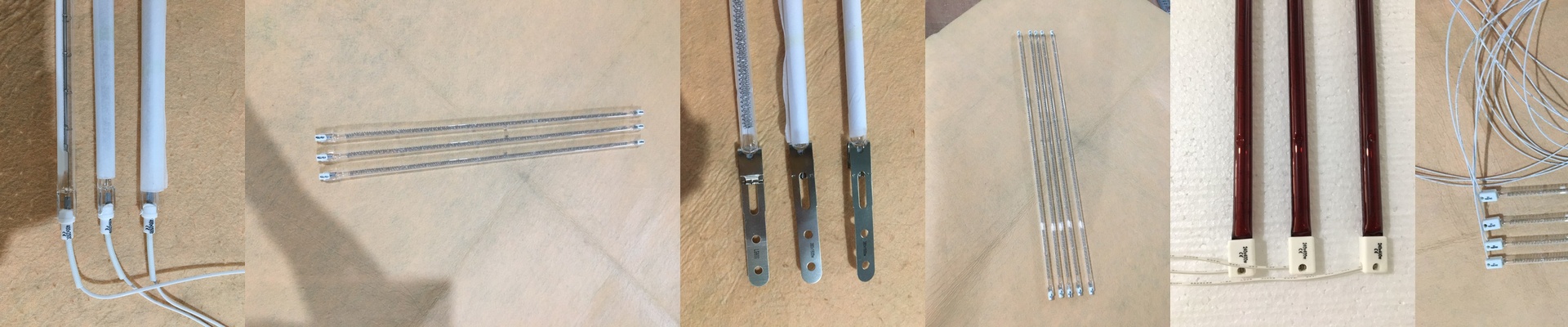
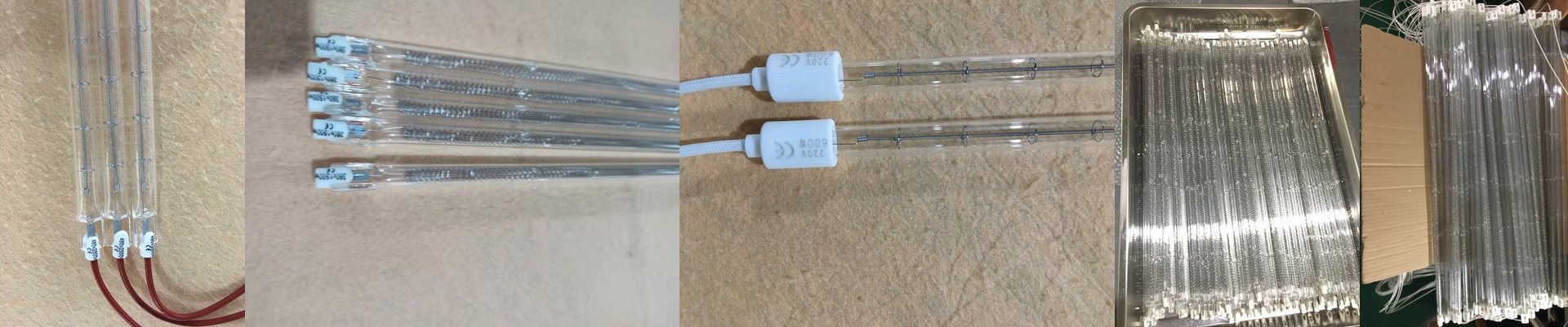
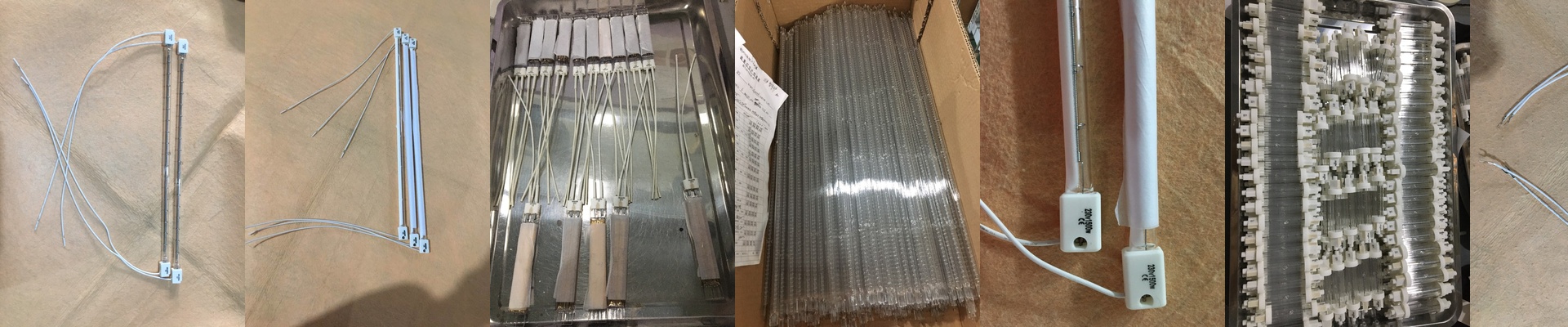
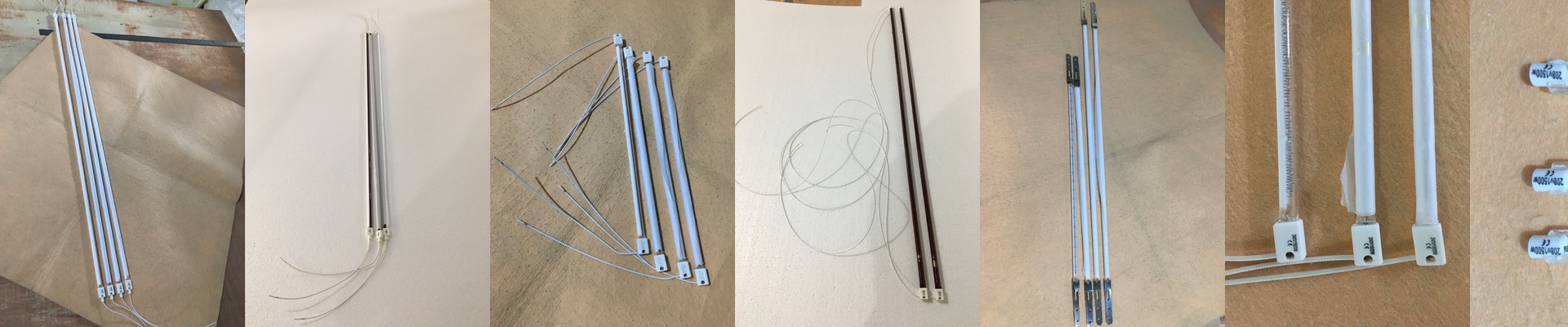
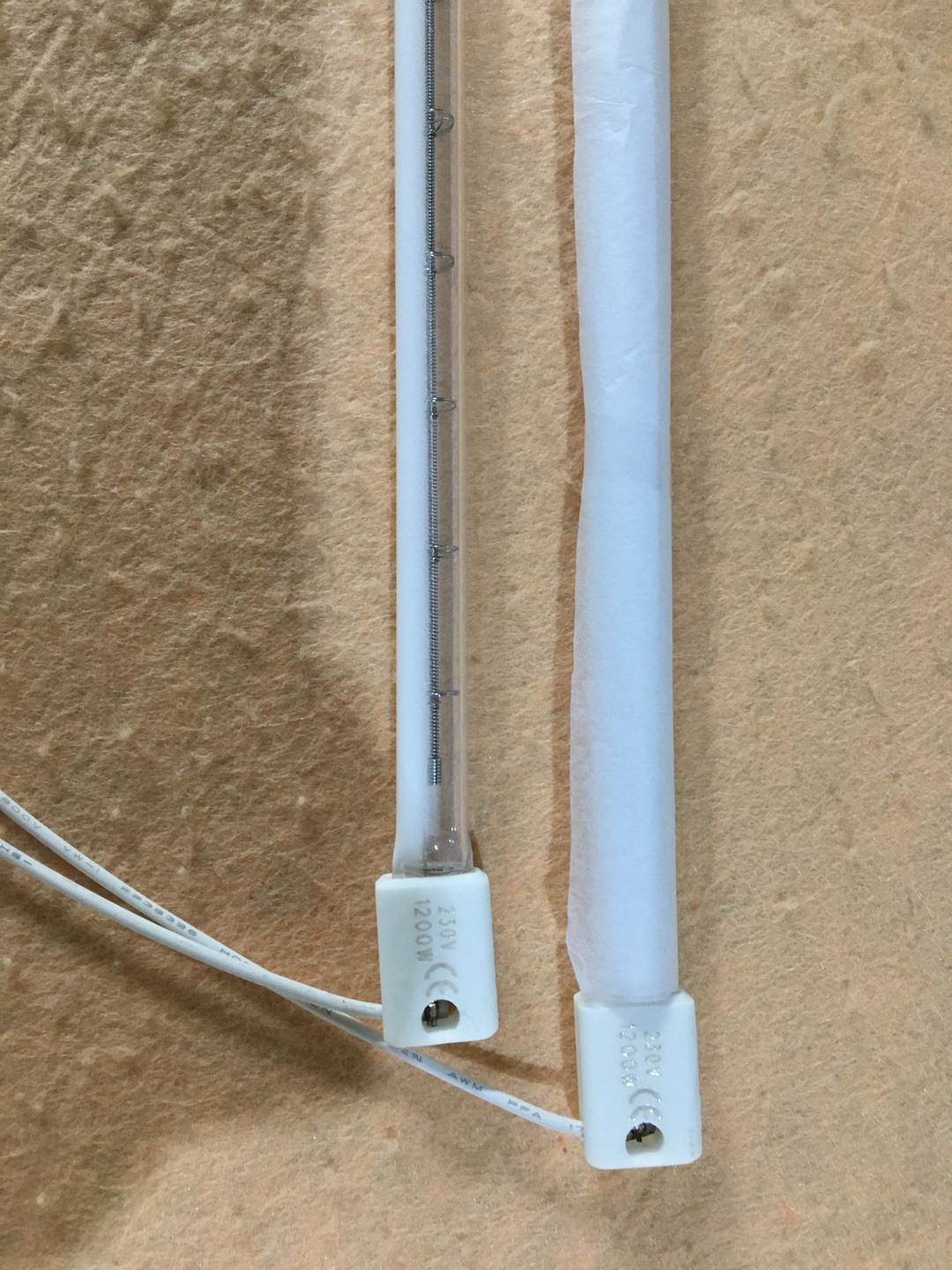
Meet the R7s halogen lamp. It’s a compact, linear infrared emitter built for industrial heating—the kind of job where space is at a premium and you absolutely can’t compromise on heat intensity. We designed it to drop straight into your existing fixtures. So you get serious power without the headache of redesigning your whole setup. Power, Voltage, and Size—Without the Fuss These lamps pack a lot of wattage into a small footprint. You’re looking at 1000W to 2500W, with voltage choices of 120V, 240V, and 400V. Go with the 400V option, and you’re in a good spot. It lowers the current draw, which makes wiring simpler and keeps voltage drop from becoming a problem on longer runs. The lamp itself runs about 300mm or 350mm long, with an active heating zone that lines up perfectly with the target area. That tight size gives you pinpoint control. You can concentrate the heat exactly where the process needs it, without blowing up your machine bay. What It’s Made Of—And Why It Matters Inside, the filament runs on a halogen cycle. That means the bulb stays cleaner and keeps output steady over time. No fading. No fuss. The tube is quartz, and there’s a good reason for that. It can handle the thermal shock of rapid on/off cycling, and it transmits shortwave infrared cleanly. We also added a reflective coating on the inside. It directs more energy forward, so you get more usable wattage right where you need it—on the work surface. And the R7s double-ended connector? It gives you a solid, two-point mount. It locks the lamp in place, keeps alignment true, and ensures reliable contact. So you get consistent power without hot spots at the terminals. Where It Shines—And What to Keep in Mind You’ll see this setup a lot in plastics work—like PET blowing and thermoforming—where you need fast, localized heating. It’s also a strong fit for packaging sealing and curing lines that demand quick response. The upside is clear: rapid heat-up, tight control over the heated zone, and a straightforward drop-in install. Just one thing to watch—high power density means you need to manage reflected heat and match cooling airflow to the wattage. If you don’t, the lamp and nearby parts can run hotter than intended.